Understanding Bid-Ask Spread
Every currency transaction involves two distinct prices. Brokers quote a higher price for buyers and a lower price for sellers. The numerical difference between these two figures forms the foundation of understanding bid-ask spread.
The bid price represents the maximum amount a buyer will pay for a specific currency pair. The ask price shows the minimum amount a seller will accept. The spread defines the exact gap between these two quotes. Market makers and brokers profit directly from this difference. You pay the spread every single time you execute a trade.
Most forex brokers quote currency pairs to the fifth decimal place. The fourth decimal place represents a standard pip. The fifth decimal place represents a fractional pip, or pipette. Pairs involving the Japanese Yen operate differently. Brokers quote JPY pairs to the third decimal place. The second decimal place represents the standard pip in JPY pairs.
- EUR/USD Bid Price: 1.05501
- EUR/USD Ask Price: 1.05521
- Spread Calculation: 1.05521 minus 1.05501 equals 0.00020 (exactly 2.0 pips)
Mastering forex trading basics requires a firm grasp of these transaction mechanics. You start every trade at a slight loss. The market must move in your favor by the exact distance of the spread before your position shows a profit.
How Understanding Bid-Ask Spread Affects the Forex Market
Market liquidity dictates the exact width of the spread. High trading volumes create narrow spreads. Low trading volumes result in wider spreads. Major banks trade directly with each other in the interbank market. They exchange hundreds of millions of dollars per transaction. These institutional players enjoy spreads of less than one-tenth of a pip. Retail brokers aggregate this institutional pricing. They add their own profit margin before offering the final price to you.
The Bank for International Settlements reports daily forex trading volume exceeds $7.5 trillion. This massive liquidity keeps spreads exceptionally tight on major currency pairs like the EUR/USD or USD/JPY. You pay much lower trading costs when you trade these highly liquid pairs. Minor and exotic currency pairs see significantly less daily volume. Lower volume forces brokers to widen the spread to compensate for the added risk of holding these less popular currencies.
- Time of Day: Spreads narrow significantly during the overlap of the London and New York sessions (8:00 AM to 11:00 AM EST).
- Economic Releases: Spreads widen immediately before major news events as liquidity providers pull their orders from the market.
- Market Volatility: Unexpected geopolitical events cause rapid and aggressive spread expansion across all currency pairs.
The Asian trading session typically features wider spreads. Tokyo and Sydney process lower volumes compared to London and New York. Spreads tighten significantly when the London session opens at 3:00 AM EST.
Key Data Points to Watch
Monitoring specific spread metrics helps you manage your daily trading expenses. A two-pip spread on a standard lot of 100,000 units costs you exactly $20. You face this $20 deficit the moment you click the buy or sell button. A 1.5 pip spread on the same lot size costs $15. These small differences compound rapidly over hundreds of trades.
Retail brokers offer two distinct pricing models. Market makers often offer fixed spreads. A fixed spread guarantees a specific transaction cost regardless of market turbulence. You pay a premium for this pricing certainty. A fixed spread on the EUR/USD typically runs between 1.5 and 2.0 pips. Electronic Communication Network (ECN) brokers offer variable spreads. Variable spreads reflect true interbank market conditions. The EUR/USD spread drops to 0.0 pips during peak liquidity on ECN platforms. ECN brokers charge a separate flat commission fee per lot traded alongside the raw spread.
- Average Spread: The typical pip gap recorded during normal, liquid market hours.
- Minimum Spread: The lowest possible pip gap available under optimal trading conditions.
- Maximum Spread: The widest pip gap recorded during periods of extreme high volatility.
Review our comprehensive forex guides to evaluate which spread type aligns with your specific trading style. Different strategies require different fee structures.
Trading Strategies
Risk Disclaimer: Forex trading involves significant risk of loss. Trading strategies do not guarantee profits. You must manage your risk carefully and never trade with money you need for daily living expenses. Past performance does not guarantee future results.
Your chosen trading style dictates your sensitivity to spread width. Scalpers execute dozens of trades per day to capture extremely small price movements. These active traders require the tightest possible spreads. A wide spread destroys a scalping strategy by consuming the entire profit margin. A scalper targeting a three-pip profit cannot survive a two-pip spread.
Day traders close all positions before the New York market closes. They execute three to five trades daily. A two-pip spread across five standard lot trades costs $100 per day. This equates to roughly $2,000 per month in pure transaction fees. Swing traders hold positions for days or weeks. They target price movements of 100 pips or more. A three-pip spread matters significantly less when you target a 150-pip gain.
- Trade During Peak Hours: Execute your orders between 8:00 AM and 11:00 AM EST to secure the lowest possible trading costs.
- Avoid News Trading: Step aside during Non-Farm Payrolls or central bank rate decisions to avoid severe spread widening and slippage.
- Use Limit Orders: Control your exact entry price and avoid execution at unfavorable spread levels during volatile periods.
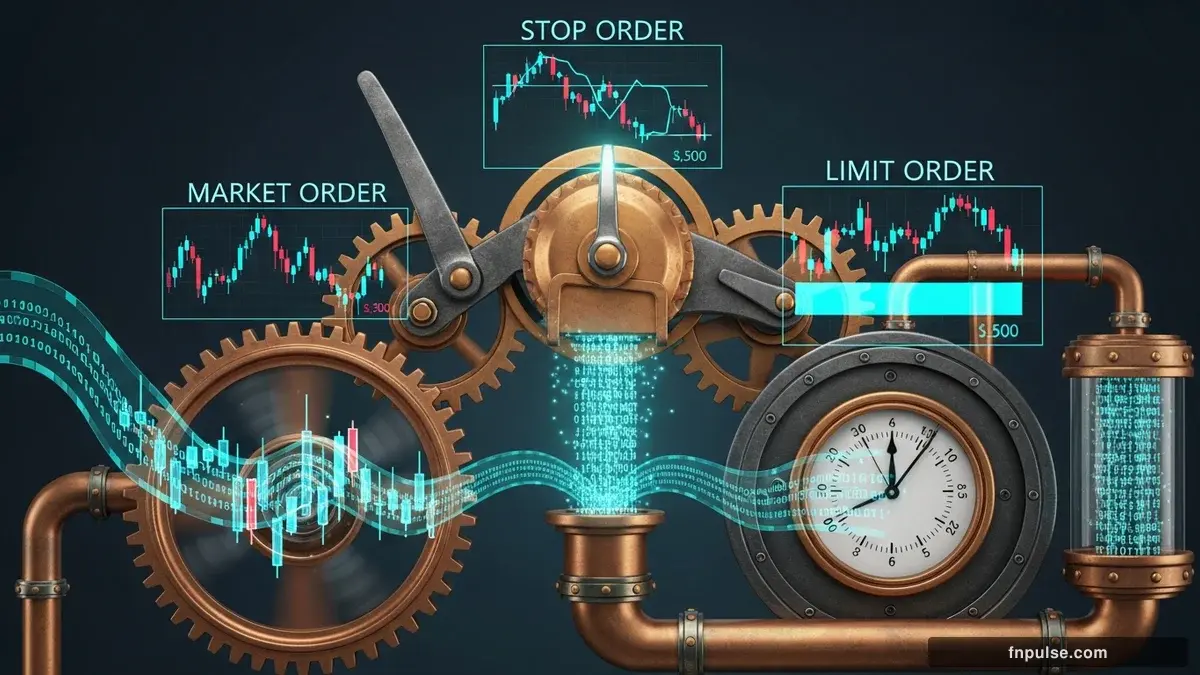
Market orders execute immediately at the current ask price. You accept whatever spread the broker dictates at the exact millisecond of execution. Limit orders allow you to define your maximum acceptable entry price. The broker only executes the trade if the market reaches your specified price. Regulatory bodies like the Commodity Futures Trading Commission mandate clear disclosure of all trading fees. Always review your broker's fee schedule before funding an account.
Historical Examples
The Swiss National Bank shocked global financial markets on January 15, 2015. The central bank abruptly removed the artificial peg between the Swiss Franc and the Euro. The EUR/CHF exchange rate collapsed by 30% in a matter of minutes. Liquidity vanished from the interbank market instantly. Brokers widened the bid ask spread on EUR/CHF from two pips to over 500 pips. Traders attempting to exit positions faced catastrophic trading costs.
The Brexit referendum on June 23, 2016, provided another extreme example of spread mechanics. The GBP/USD spread expanded from one pip to more than 20 pips as the voting results pointed to a UK exit from the European Union. Global financial markets panicked again in March 2020. The COVID-19 pandemic forced institutional players to liquidate assets rapidly. Forex market volatility spiked to ten-year highs. The spread on the AUD/USD pair expanded by 400% during the Asian trading session.
- Stop-loss orders fail to protect accounts during severe spread widening events.
- A triggered stop-loss becomes a market order and executes at the worst possible widened spread price.
- Brokers pass interbank liquidity gaps directly to retail traders without warning.
- Holding open positions over major political weekends carries extreme financial risk.
These historical events prove the absolute necessity of understanding forex market mechanics. Market conditions change rapidly. Trading costs escalate without warning during systemic shocks.
Key Takeaways
The bid-ask spread represents your primary cost of doing business in the foreign exchange market. You pay this mandatory fee on every single transaction. High liquidity creates narrow spreads. Low liquidity and high volatility create wide spreads. You control your total trading costs by selecting highly liquid currency pairs and executing trades during optimal market hours.
- Calculate the exact dollar cost of the spread before you enter any live trade.
- Monitor average spreads across three different brokers to ensure you receive competitive pricing.
- Track your total spread costs monthly to evaluate your overall trading efficiency and profitability.
Open your broker's trading platform right now. Compare the current spread on the highly liquid EUR/USD against the spread on a minor pair like the GBP/NZD. Log these specific numbers in your trading journal to track cost variations throughout the trading week.