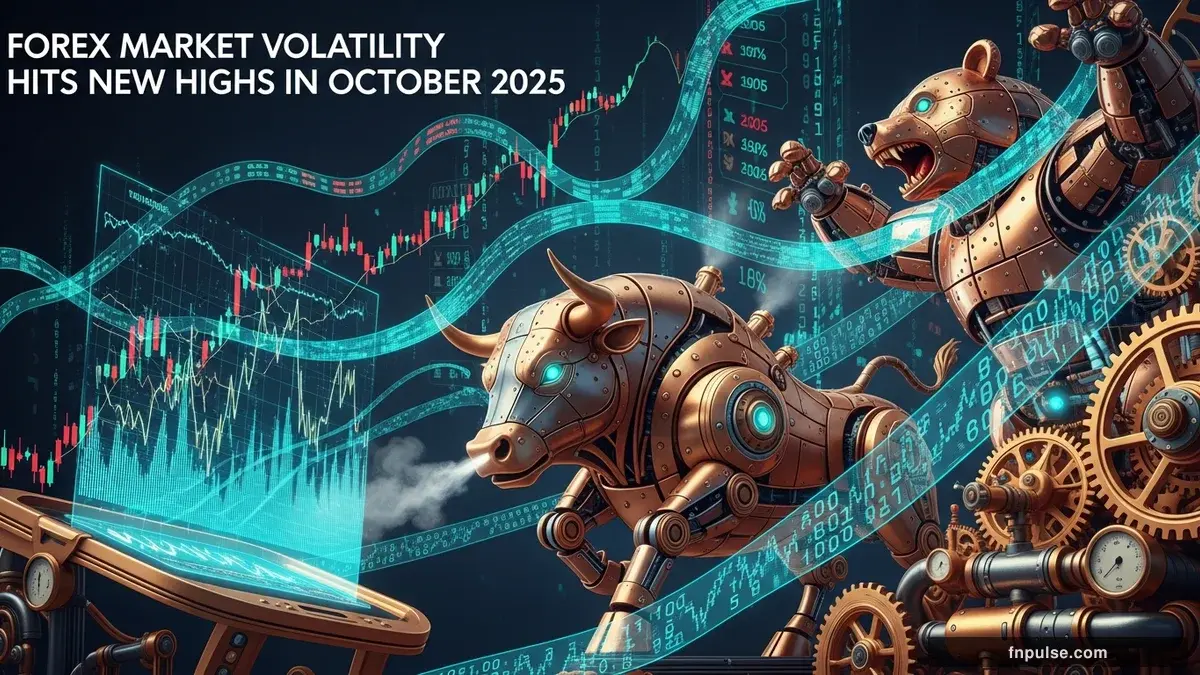
The Market's Mood Swing: Mastering the Flow of Fear and Greed
Beneath the endless stream of economic data, the intricate chart patterns, and the complex monetary policies, there is a single, powerful undercurrent that drives all financial markets: risk sentiment. It is the collective mood of the market's participants, swinging on a pendulum between fear and greed, optimism and pessimism. Understanding and aligning your trades with this dominant emotional current is one of the most crucial skills a trader can develop. It is the force that determines whether capital flows into risky assets, fueling powerful rallies, or flees to safety, triggering sharp declines.
This guide is your ultimate resource for understanding and trading risk sentiment. We will move beyond vague notions of "fear and greed" to provide a concrete, actionable framework. You will learn to identify the key characteristics of "risk-on" and "risk-off" environments, discover the specific assets that thrive or suffer in each, and master the use of "risk barometer" currency pairs like AUD/JPY to get a real-time read on the market's mood. As we've hinted in our Master Guide to Currency Correlation, this is a concept that ties everything together.
The Two Faces of the Market: Defining Risk-On vs. Risk-Off
Risk sentiment is a spectrum, but it's most useful to think of it in terms of two dominant states or "regimes."
Risk-On: The Bull is Running
A risk-on environment is characterized by optimism, confidence, and a strong appetite for growth. Investors are willing to take on more risk in the pursuit of higher returns.
- Key Characteristics:
- Positive economic news is rewarded.
- Recession fears are low.
- Market volatility is generally low and stable.
- Investors are focused on growth stories and future earnings.
- What Performs Well (Assets to BUY):
- Stock Indices: S&P 500, Nasdaq 100, DAX 40. These are the primary beneficiaries of economic optimism.
- Commodity Currencies ("CommDolls"): The Australian Dollar (AUD), New Zealand Dollar (NZD), and Canadian Dollar (CAD) rally as demand for their industrial and agricultural exports rises. Learn more in our deep dive on the CommDolls.
- Emerging Market Currencies & Stocks: Capital flows into developing economies in search of high growth potential.
- Crude Oil: Rises on expectations of increased global demand.
- What Performs Poorly (Assets to SELL):
- Safe-Haven Currencies: The Japanese Yen (JPY), Swiss Franc (CHF), and often the US Dollar (USD) weaken as there is no need to "hide" in safety. The JPY is particularly vulnerable, making it an ideal funding currency for carry trades.
Risk-Off: The Bear Awakens
A risk-off environment is characterized by fear, uncertainty, and a focus on capital preservation. Investors are selling risky assets and are willing to accept lower (or even no) returns in exchange for safety.
- Key Characteristics:
- Negative economic news is punished severely.
- Recession fears are high.
- Market volatility spikes.
- Investors are dumping assets and fleeing to cash or safe havens.
- What Performs Well (Assets to BUY):
- Safe-Haven Currencies: The Japanese Yen (JPY) and Swiss Franc (CHF) are the primary beneficiaries of a flight to safety. The US Dollar (USD) also strengthens due to its status as the world's most liquid reserve currency. Uncover the full story in our guide to the Yen's unique role.
- Gold (XAU/USD): The ultimate traditional safe-haven asset, gold often rallies during times of fear and uncertainty.
- Government Bonds: Capital pours into the safety of US Treasury Bonds, German Bunds, etc.
- What Performs Poorly (Assets to SELL):
- Stock Indices: Suffer sharp declines as future earnings prospects dim.
- Commodity Currencies: AUD, NZD, and CAD get hit hard as expectations of global growth collapse, cratering demand for commodities.
- Crude Oil: Plummets on fears of a global recession leading to lower energy demand.
The Market's "Canary in the Coal Mine": How to Measure Risk Sentiment
How do we know which regime we are in? Professional traders use a dashboard of key intermarket indicators to take the market's temperature.
The VIX Index (The "Fear Index"): The CBOE Volatility Index measures the market's expectation of 30-day volatility on the S&P 500.
- Low VIX (below 20): Generally indicates a calm, risk-on environment.
- High VIX (above 30): Indicates significant fear and a risk-off environment. A spiking VIX is a major warning sign for stock market bulls.
The AUD/JPY Cross-Pair (The Pro's Barometer): This is arguably the cleanest and most accessible real-time gauge of risk sentiment available to forex traders. It pits the classic "risk-on" currency (AUD) against the classic "risk-off" currency (JPY).
- Strongly Rising AUD/JPY: A clear signal of a risk-on environment.
- Sharply Falling AUD/JPY: A clear signal of a risk-off environment.
- Watching a 1-hour chart of AUD/JPY throughout the day can give you instant insight into the market's shifting mood.
- U.S. Treasury Bond Yields: The yield on the 10-Year US Treasury Note is another key indicator.
- Falling Yields: Indicates that investors are buying bonds, which is a classic risk-off flight to safety.
- Rising Yields: Indicates investors are selling bonds (seen as safe) to buy riskier assets.
Practical Trading Strategies Based on Risk Sentiment
The Confirmation Overlay Strategy:
- Concept: Use risk sentiment as the final filter before taking any trade.
- Workflow:
- You find a perfect technical buy setup on the GBP/USD chart.
- Before you enter, you glance at your risk barometer, AUD/JPY.
- You see that AUD/JPY is falling off a cliff, signaling a sharp shift to a risk-off mood.
- Decision: You pass on the GBP/USD long trade. Even though the technical setup was good, trading a risk-sensitive currency like GBP against the safe-haven USD is a low-probability trade when the entire market is panicking. You have just saved yourself from fighting the market's dominant tide.
The "Risk-Off" Crisis Trade:
- Concept: Directly trade the flight to safety when a major, unexpected negative event occurs.
- Workflow:
- News breaks of a major bank failure or a new military conflict.
- You immediately see stock futures plummet and the VIX spike.
- Action: You look for the weakest risk-on currency and the strongest risk-off currency. You decide to sell AUD/JPY.
- Rationale: You are positioning yourself directly in the path of the capital flight. As investors dump Australian assets (selling AUD) and pile into the safety of the Yen (buying JPY), the AUD/JPY pair is likely to experience a rapid and sustained decline.
The "Risk-On" Relief Rally Trade:
- Concept: Trade the wave of relief and optimism that occurs when a major source of uncertainty is resolved.
- Workflow:
- The US Federal Reserve holds a press conference and signals they are done raising interest rates, removing a major headwind for the market.
- You see the VIX fall, bond yields drop, and stock futures surge.
- Action: You look for an opportunity to buy a risk-on asset. You see that the S&P 500 CFD (e.g., US500) is breaking out of a technical consolidation pattern. You buy the S&P 500 CFD.
- Rationale: You are aligning your trade with the new wave of optimism. With the cloud of monetary policy uncertainty lifted, capital is flowing back into equities, likely fueling a multi-day or multi-week rally.
Conclusion: Feel the Tide, Then Ride the Wave
Risk sentiment is the tide of the financial ocean. You can try to fight it, but you will almost certainly exhaust yourself and your account. The professional trader learns to feel the tide's direction and then looks for waves (trade setups) moving in the same direction.
By adding a simple risk sentiment dashboard to your analysis—monitoring the VIX, the AUD/JPY cross, and bond yields—you elevate your trading to a new level. You stop making isolated bets and start making informed decisions based on the market's most powerful, all-encompassing force. This macro awareness provides the context that turns a good technical trader into a great one.