
BOJ Hikes Rates to 30-Year High, Navigating Japan's Economic Crossroads
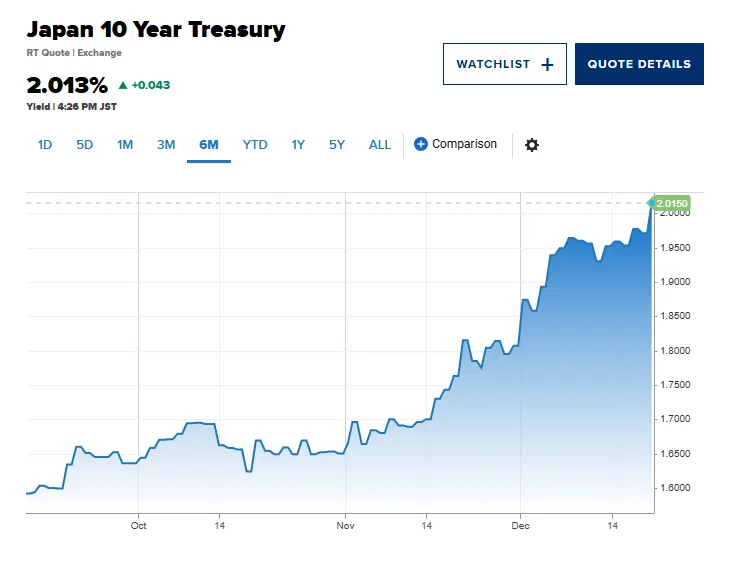
Japan's central bank raises benchmark rates to 0.75%, pushing 10-year bond yields past 2% for the first time since 1999. This move signals a determined shift towards policy normalization amidst economic challenges.
The Bank of Japan increased its benchmark interest rate to 0.75%, a three-decade high. This decision aims to combat persistent inflation and foster sustainable wage growth.
Yields Surge, Yen Weakens
Following the rate hike, the yield on Japan's 10-year government bond (JGB) rose to 2.019%. This breached the 2% mark for the first time since 1999. The 20-year JGB yield also climbed to 2.975%. The Japanese yen weakened to around 155.92 against the U.S. dollar. Japan's benchmark Nikkei 225 stock index gained 1.28%.
Inflationary Pressures Persist
Japan has experienced cpi" title="Understanding inflation and CPI in forex">inflation above the BOJ's 2% target for 44 consecutive months. Consumer price growth reached 2.9% in November. Core inflation stood at 3.0%. Despite this, real wages have declined for 10 months. The BOJ projects core inflation will decelerate below 2% from April to September 2026. It expects a gradual pickup thereafter.
BOJ's Balancing Act
The BOJ acknowledges economic weakness. Japan's economy shrank 0.6% quarter-on-quarter in the third quarter, contracting 2.3% on an annualized basis. However, the central bank expects corporate profits to remain high. It anticipates firms will continue raising wages in 2026. The BOJ states that real interest rates will remain 'significantly negative.' This suggests financial conditions remain accommodative.
High Debt, Political Scrutiny
Japan carries the world's highest debt-to-GDP ratio, around 229% to 236% according to IMF data. Rising bond yields increase borrowing costs for the government. This adds to fiscal strain. Prime Minister Sanae Takaichi, initially a proponent of looser monetary policy, has moderated her stance. She now emphasizes the BOJ's independence and policy coordination. The weak yen and cost-of-living crisis likely influenced her acceptance of the rate hike. Her administration recently approved a 21.3 trillion yen stimulus package.
Outlook for Further Tightening
This rate hike marks the BOJ's second increase this year. It follows the abandonment of negative interest rates in 2024. The central bank aims for a 'virtuous cycle' of rising wages and prices. Analysts expect further gradual tightening into 2026. Some forecast the policy rate could reach 1% by mid-2026. The BOJ has signaled readiness for additional hikes if economic and price forecasts materialize.

FN Pulse Editorial Team
Expert Trading Analysts
Our editorial team consists of experienced forex traders, financial analysts, and market researchers dedicated to providing accurate and actionable trading education.