
Iraqi Oil Cannot Fill Venezuela's Void in U.S. Market
Economic and logistical hurdles prevent Iraq from substituting Venezuelan heavy crude for U.S. refiners.
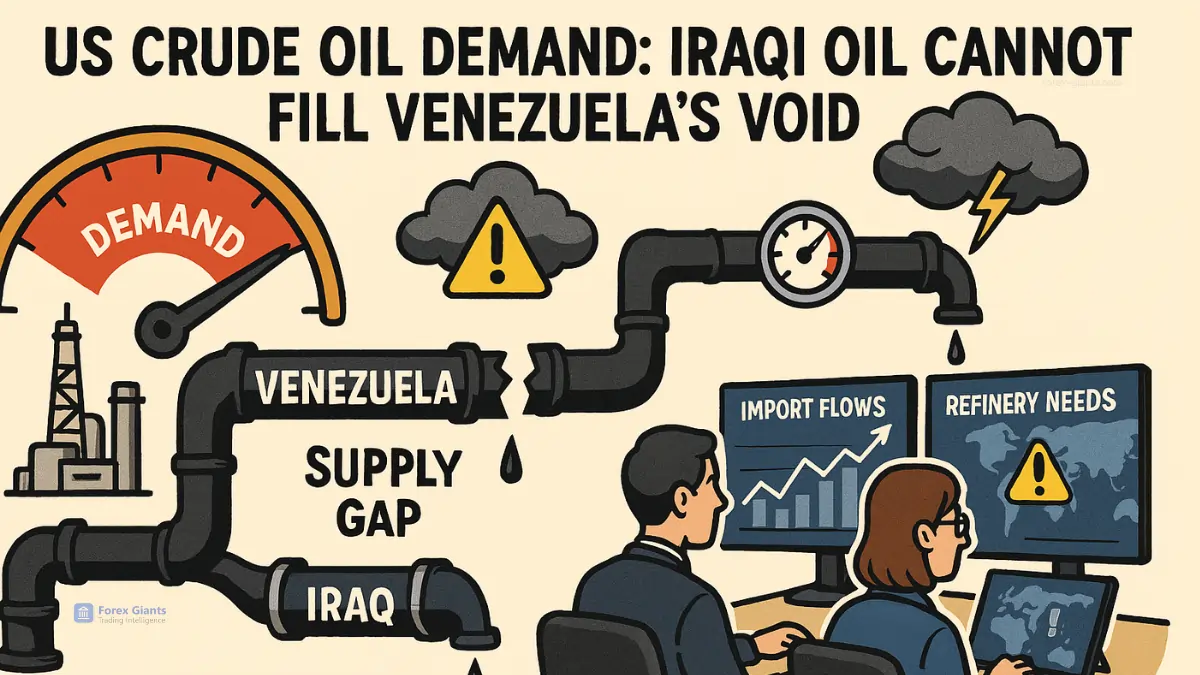
U.S. refiners face a heavy crude supply challenge as Venezuelan output declines. Iraqi oil, a theoretical substitute, presents significant financial and logistical barriers.
U.S. refiners cannot rely on Iraqi crude to replace Venezuelan oil. Economic realities and production limits make such a substitution unfeasible. This creates a complex supply picture for American refineries.
High Costs Deter Iraqi Exports
Shipping heavy crude from Iraq to the United States is not financially viable. Iraqi economist Nabil Al-Marsoumi states the economics do not support it. Basrah Heavy, a key Iraqi grade, trades at a discount to Basrah Medium. Transporting Basrah Heavy to the U.S. adds approximately $3.50 per barrel in shipping and insurance costs. This margin does not justify the trade.
OPEC+ Limits Iraqi Production
Iraq's oil production faces constraints from the OPEC+ agreement. Baghdad must compensate for past overproduction. This limits Iraq's ability to significantly increase its output. Iraq cannot simply boost production to meet U.S. demand. This adherence to quotas restricts its market flexibility.
Venezuela's Deepening Crisis
Venezuela's oil industry faces severe disruption. U.S. sanctions include a blockade of tankers carrying Venezuelan oil. This action creates a critical storage crisis. Venezuela's oil storage facilities are nearing maximum capacity. This forces Venezuela to consider shutting in oil production.
The tanker blockade also affects Venezuela's supply of Russian naphtha. Naphtha is essential for diluting Venezuela's heavy crude. Without it, the crude cannot flow through pipelines for export. A tanker carrying Russian naphtha recently turned back from Venezuela. This further compounds Venezuela's production challenges. Its crude output has already declined significantly.
U.S. Refiners Seek Alternatives
U.S. Gulf Coast refineries are designed to process heavy, sour crude. Venezuela historically supplied this type of oil. Canada is a primary alternative for heavy crude imports. Mexico and Colombia also provide heavy crude, but their capacity is limited. Middle Eastern heavy grades are theoretically suitable. However, logistical costs and quality differences make them less competitive for the U.S. market.
You must understand these market dynamics. The U.S. heavy crude supply chain faces ongoing challenges. Simple substitutions are not always economically or logistically practical.

FN Pulse Editorial Team
Expert Trading Analysts
Our editorial team consists of experienced forex traders, financial analysts, and market researchers dedicated to providing accurate and actionable trading education.