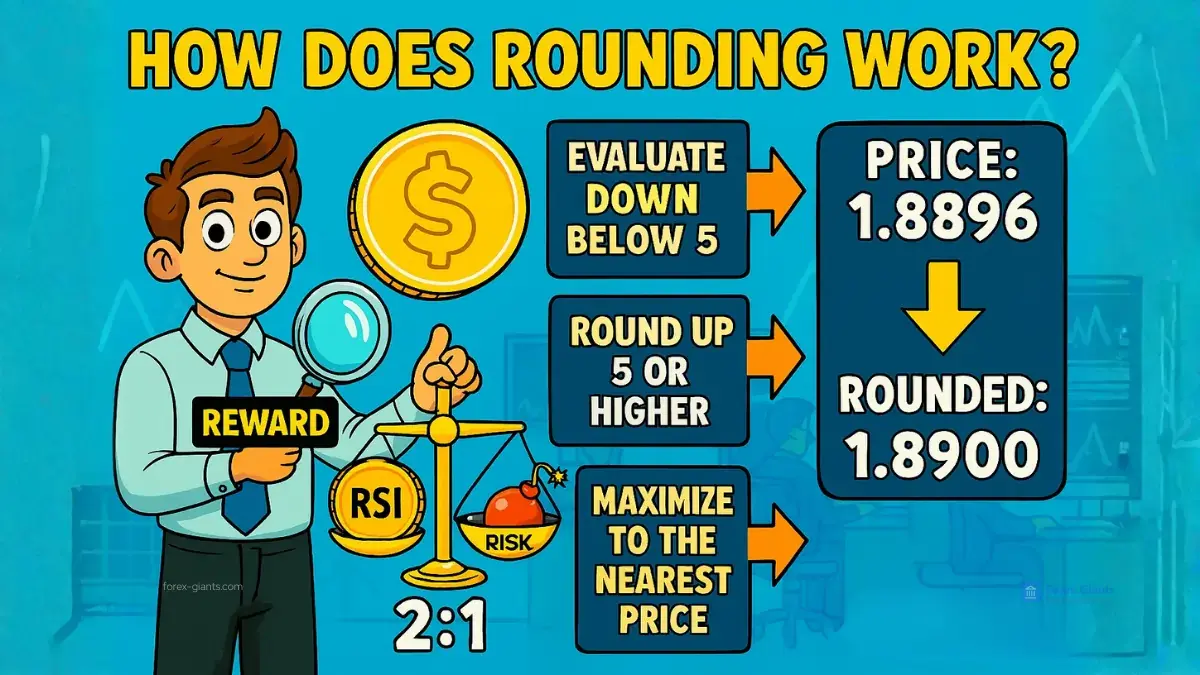
How Does Rounding Work?
Rounding is a way to simplify numbers, making them easier to work with. It involves adjusting a number to the nearest whole number, tenth, hundredth, or any other specified decimal place.
Basic Rounding Rules:
Identify the rounding place: Determine which decimal place you're rounding to (e.g., nearest whole number, tenth, hundredth).
Look at the digit to the right: Observe the digit immediately to the right of the rounding place.
Rounding Rules:
If the digit to the right is 5 or greater, round up (add 1 to the rounding place digit).
If the digit to the right is less than 5, round down (leave the rounding place digit as it is).
Drop the digits to the right: Remove all digits to the right of the rounding place.
Examples:
Rounding to the Nearest Whole Number:
3.14 rounds to 3 (because 1 is less than 5).
7.8 rounds to 8 (because 8 is greater than 5).
12.5 rounds to 13 (because 5 is equal to 5).
Rounding to the Nearest Tenth:
4.56 rounds to 4.6 (because 6 is greater than 5).
9.21 rounds to 9.2 (because 1 is less than 5).
10.35 rounds to 10.4 (because 5 is equal to 5).
Rounding to the Nearest Hundredth:
1.234 rounds to 1.23 (because 4 is less than 5).
5.678 rounds to 5.68 (because 8 is greater than 5).
0.995 rounds to 1.00 (because 5 is equal to 5; consider carrying over if necessary).
Rounding in Finance:
In finance and Forex trading, rounding is used to represent prices, calculate profits/losses, and manage risk. Brokers often specify the number of decimal places used in their platforms. Understanding how rounding works is important for accurate calculations and informed decision-making.