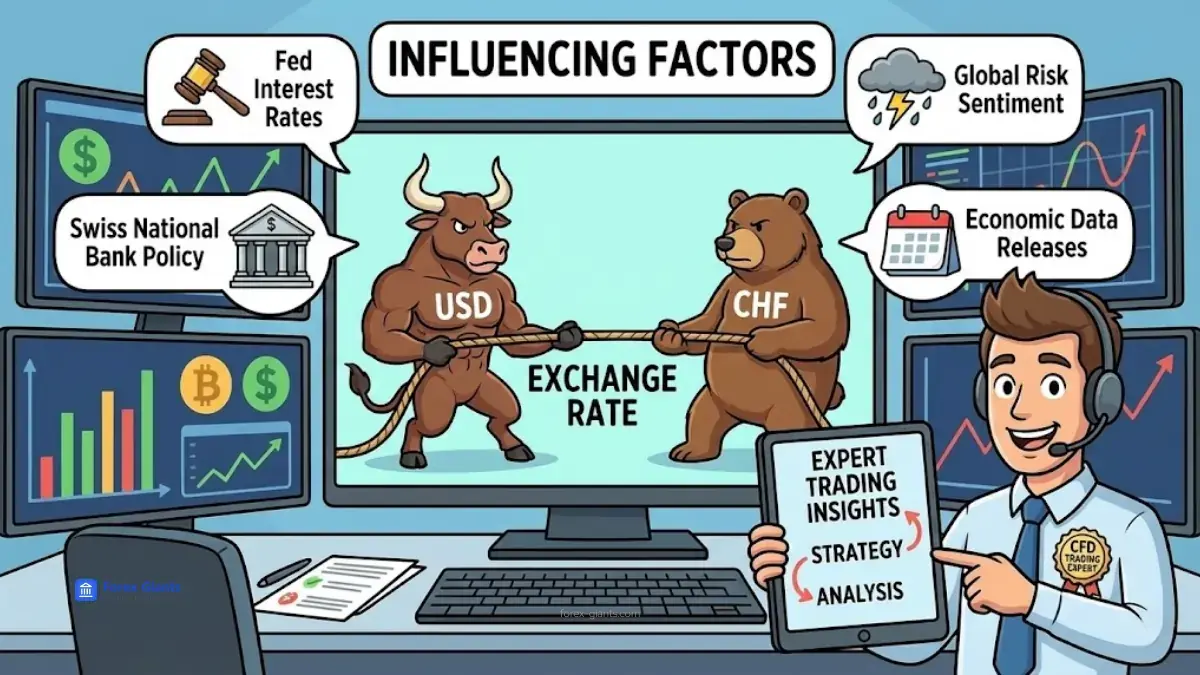
USD/CHF Exchange Rate: Unpacking the Key Drivers & Expert Trading Insights
As the Head Market Strategist for Forex-Giants.com, I've spent over two decades dissecting the intricate dance between global currencies. Few pairs present as fascinating a puzzle as the USD/CHF. Often dubbed "The Swissie," this pairing pits the world's undisputed reserve currency, the US Dollar, against the ultimate bastion of financial safety, the Swiss Franc. Understanding what drives the USD/CHF exchange rate is not merely an academic exercise; it is a masterclass in global macroeconomics, risk sentiment, and central bank strategy.
This is not a pair for the faint of heart or the uninformed. Its movements can be subtle, driven by quiet capital flows, yet they can erupt with breathtaking volatility when geopolitical tensions flare or when the Swiss National Bank (SNB) makes its presence known. Superficial analysis simply won't suffice.
Why the USD/CHF Demands Institutional-Grade Analysis
To truly grasp the dynamics of the Swiss Franc to US Dollar analysis, traders must look beyond simple chart patterns. You must delve into the diverging mandates of the Federal Reserve and the Swiss National Bank, understand the psychology of safe-haven flows, and appreciate the subtle intermarket correlations that can foreshadow major moves. This pair is a barometer for global risk appetite, making it a cornerstone of many sophisticated hedging and portfolio diversification strategies.
What You'll Discover: From Macro Drivers to Advanced Strategies
In this definitive guide, we will move beyond the headlines to provide you with an institutional-grade framework for analyzing the USD/CHF. We will dissect the primary economic, monetary, and geopolitical factors that dictate its value. More importantly, we will translate this complex analysis into actionable insights and strategic considerations you can apply using the advanced tools available at Forex-Giants.com, from MetaTrader 5 and cTrader to our proprietary ProTrader X suite.
The Foundational Pillars: Monetary Policy Divergence & Interest Rate Differentials
At the very core of any currency pair's valuation lies the monetary policy of its respective central banks. For USD/CHF, this means a constant tug-of-war between the U.S. Federal Reserve (Fed) and the Swiss National Bank (SNB). Their divergent goals and policy tools are the primary engine of long-term trends in the pair.
The Federal Reserve's Stance on the US Dollar: A Deep Dive into Rate Decisions
The Federal Reserve operates under a dual mandate: maximizing employment and maintaining price stability (typically targeting 2% inflation). Its primary tool is the Federal Funds Rate.
Hawkish Stance (Higher Rates): When the U.S. economy is strong, and inflation is a concern, the Fed adopts a "hawkish" stance, raising interest rates. Higher rates make holding US Dollars more attractive to global investors seeking better returns (yield), increasing demand for the USD and generally causing the USD/CHF to rise.
Dovish Stance (Lower Rates): Conversely, during economic downturns, the Fed turns "dovish," cutting rates to stimulate borrowing and spending. Lower yields make the USD less attractive, often leading to a weaker dollar and a fall in the USD/CHF.
Traders must meticulously follow the Federal Open Market Committee (FOMC) meetings, statements, and press conferences for clues on the future Federal Reserve interest rate outlook. Our Central Bank Tracker is an indispensable tool for staying ahead of these critical announcements.
Swiss National Bank's (SNB) Approach to the Swiss Franc: Stability Amidst Turmoil
The SNB's mandate is fundamentally different. While it also targets price stability, its overarching concern is the stability of the Swiss economy, which is heavily export-oriented. A Swiss Franc that is too strong can cripple Swiss exporters by making their goods prohibitively expensive on the global market.
Consequently, the SNB has a long history of actively intervening in the currency markets to prevent excessive CHF appreciation, especially during times of global stress when capital floods into Switzerland for safety. The SNB's toolkit includes interest rate adjustments, foreign exchange interventions (buying foreign currency to sell CHF), and managing its massive balance sheet. Understanding the SNB monetary policy decisions requires reading between the lines of their statements, as they are often less transparent than the Fed.
Analyzing the Interest Rate Differential: Identifying Carry Trade Implications & Opportunities
The difference between the U.S. Federal Funds Rate and the SNB's Policy Rate is known as the interest rate differential. This is one of the most powerful factors influencing USD/CHF. When the U.S. rate is significantly higher than the Swiss rate, it creates a positive carry opportunity.
A carry trade involves buying a high-yielding currency (like the USD in this scenario) and funding it with a low-yielding currency (the CHF). Traders can earn the interest rate differential for every day they hold the position. This consistent demand for the higher-yielding currency can create sustained, long-term uptrends. For an in-depth look at current opportunities, explore our latest Carry Trade Report.
Economic Indicators: The Pulse of USD/CHF Volatility
If central bank policy sets the long-term trend, then high-frequency economic data releases provide the short-term volatility. These releases offer a real-time health check on the U.S. and Swiss economies, and any significant surprises can cause sharp price swings.
Inflation Data (CPI, PPI) & Its Currency Impact on Both Sides of the Atlantic
Consumer Price Index (CPI): Measures the change in the price of a basket of consumer goods and services. Higher-than-expected inflation in the U.S. often forces the Fed to be more hawkish, boosting the USD.
Producer Price Index (PPI): Tracks the change in selling prices received by domestic producers. It's often seen as a leading indicator for consumer inflation.
In Switzerland, the SNB watches its CPI data closely. Persistently low inflation gives them more room to keep rates low or even intervene to weaken the Franc, whereas a surprising spike in inflation could force them to tighten policy.
Gross Domestic Product (GDP) & Economic Growth: Gauging National Strength
GDP is the broadest measure of economic health. A strong U.S. GDP growth figure relative to Switzerland's indicates a more robust economy, attracting investment and strengthening the USD against the CHF. Traders compare the quarter-over-quarter and year-over-year growth rates to gauge economic momentum.
Employment Figures (NFP, Unemployment Rate): The Labor Market's Influence
The U.S. labor market data is arguably the most-watched economic release in the world.
Non-Farm Payrolls (NFP): Released on the first Friday of every month, this report shows how many jobs were created or lost. A strong number signals a healthy economy, supporting a stronger USD. Mastering how to trade this event is crucial, and our guide to NFP Trading Strategies is essential reading.
Unemployment Rate: A low unemployment rate indicates a tight labor market, which can lead to wage inflation and a more hawkish Fed.
Switzerland's employment data is also important but tends to have a more muted impact on the global stage compared to the blockbuster NFP report.
Trade Balance and Current Account Dynamics: Understanding Capital Flows
The Balance of Payments, particularly the trade balance and current account, tracks the flow of goods, services, and capital into and out of a country. Switzerland has historically run a large current account surplus, meaning it earns more from foreign sources than it spends. This creates a persistent, underlying demand for the Swiss Franc. The U.S., by contrast, typically runs a large deficit.
Retail Sales & Consumer Confidence: Early Signals of Economic Health
These indicators provide insight into consumer spending, which is a massive component of the U.S. economy. Strong retail sales and high consumer confidence suggest consumers are optimistic and willing to spend, signaling economic strength and supporting the USD.
Understanding the Swiss KOF Economic Barometer for Future Insights
For traders seeking a forward-looking edge, the Swiss KOF Economic Barometer is a critical, often-overlooked indicator. It is a composite leading indicator for the Swiss economy, designed to predict the direction of GDP growth over the following six months. A reading above its long-term average suggests positive growth ahead, which can be supportive of the CHF.
Safe-Haven Flows & Geopolitical Risk: When Uncertainty Strikes
This is where the unique character of the USD/CHF truly shines. Both the USD and the CHF are considered "safe-haven" currencies, but they derive this status from different sources and behave differently during crises.
Switzerland's Historical Role as a Premier Safe Haven Currency
The Swiss Franc's safe-haven status is built on centuries of political neutrality, a stable and transparent government, a robust legal system, and a famously secure banking sector. When geopolitical tensions rise anywhere in the world—be it a military conflict, a sovereign debt crisis, or political instability—global capital seeks refuge. Switzerland is often the first port of call, leading to massive inflows and a rapid appreciation of the CHF.
The US Dollar as a Global Reserve & Safe-Haven Asset: Dual Dynamics
The US Dollar's safe-haven status is rooted in its role as the world's primary reserve currency. It is the most liquid currency, and U.S. Treasury bonds are considered the world's risk-free asset. During a global panic, investors and institutions liquidate other assets and flock to the safety and liquidity of the USD. This can create a paradoxical situation where both the USD and CHF strengthen simultaneously against other currencies like the EUR or GBP.
Geopolitical Events: Wars, Crises, and Elections – Impact on Currency Sentiment
The impact of geopolitical events on USD/CHF is a direct test of risk aversion.
European Crisis (e.g., Eurozone debt crisis): Capital will flood out of the Eurozone and into neighboring Switzerland, causing the CHF to strengthen dramatically (USD/CHF falls).
Global Crisis (e.g., 2008 financial crisis, 2020 pandemic): The initial panic often boosts the USD due to its liquidity (a "dash for cash"). However, the CHF will also strengthen, and the ultimate direction of USD/CHF depends on the specific nature of the crisis and the central bank responses.
Market Sentiment & Risk Aversion: A Deep Dive into Investor Psychology
Beyond specific events, the general market sentiment is a key driver. When investors are optimistic ("risk-on"), they sell safe-haven currencies like the CHF and USD to buy higher-yielding assets in emerging markets. This can weaken both currencies, but often weakens the CHF more, causing USD/CHF to rise. When fear dominates ("risk-off"), the reverse happens. Gauging this sentiment requires a holistic view of the market, which is a core part of our daily market analysis reports.
[Placeholder for Infographic: A timeline chart showing major global risk events (e.g., 9/11, 2008 GFC, Brexit, COVID-19) overlaid with the USD/CHF exchange rate to visually demonstrate the correlation between risk aversion and currency movements.]
Intermarket Correlations: Beyond the Direct Drivers of USD/CHF
No currency pair exists in isolation. Professional traders analyze key intermarket relationships to gain a more complete picture and often find leading indicators for future price action.
Gold & Other Commodities: Indirect Influences on the Swiss Franc
While the CHF is no longer officially backed by gold, a strong psychological and historical link remains. Switzerland holds vast gold reserves, and the price of gold is often seen as a barometer of global uncertainty. A rising gold price often coincides with a strengthening CHF, exerting downward pressure on the USD/CHF.
EUR/USD & Global Currency Market Dynamics: Ripple Effects on USD/CHF
The EUR/USD is the most heavily traded currency pair in the world, and it has a strong negative correlation with USD/CHF. This is due to Switzerland's close economic ties with the Eurozone. When the Euro strengthens against the Dollar (EUR/USD rises), the Swiss Franc often strengthens in sympathy, causing USD/CHF to fall. Traders on our MetaTrader 5 Pro platform often overlay the EUR/USD and USD/CHF charts (after inverting one) to visualize this powerful relationship.
Equity Market Performance & Risk-On/Risk-Off Flows: A Guide to Systemic Risk
Global equity indices, such as the S&P 500, are excellent proxies for risk appetite. A rallying stock market signifies a "risk-on" environment, which is typically negative for the safe-haven CHF, leading to a higher USD/CHF. Conversely, a sharp sell-off in equities signals "risk-off" sentiment, driving capital into the Franc and pushing USD/CHF lower.
Advanced Analysis for USD/CHF Traders on Forex-Giants.com
Understanding the fundamental drivers is only half the battle. Executing profitable trades requires a robust platform, powerful tools, and a sound strategy.
Leveraging Proprietary Tools: Unlocking ProTrader X Insights for USD/CHF Analysis
On our exclusive FN Pulse ProTrader X platform, we provide proprietary analytical tools designed to give you an edge. Our sentiment indicators can track institutional order flow, while our volatility analysis tools help you identify periods of consolidation and potential breakouts in the USD/CHF, especially around key data releases.
Applying Technical Analysis & Identifying Key Support/Resistance Levels
Fundamental analysis tells you why a currency might move, while technical analysis helps determine when and where it might move. On both our cTrader Advanced and MT5 platforms, you can use indicators like Moving Averages, RSI, and Fibonacci retracements to identify key long-term support and resistance levels, entry points, and stop-loss placements.
Developing Robust Trading & Hedging Strategies for USD/CHF Volatility
A comprehensive USD/CHF strategy integrates both fundamental and technical analysis. For example, a trader might identify a long-term bullish fundamental bias due to a widening interest rate differential. They would then use technical analysis to time their entry after a price pullback to a key support level. For those managing multi-currency portfolios, the CHF is an excellent tool for diversification and risk mitigation. Learn more by exploring our advanced guides on forex hedging strategies.
Mastering Risk Management Principles for USD/CHF Trading Success
Given the potential for sudden bursts of volatility, particularly from SNB interventions, disciplined risk management is non-negotiable. Always use stop-loss orders, trade with appropriate position sizes, and understand the risks involved. Our resource center on risk management essentials provides the foundational knowledge every serious trader needs.
The Future Outlook for USD/CHF: Navigating Complexities & Opportunities
Looking ahead, the trajectory of the USD/CHF exchange rate will continue to be shaped by the great macroeconomic themes of our time. The path of global inflation, the pace of central bank policy normalization, and the ever-present geopolitical landscape will be the dominant forces.
Long-Term Projections & Scenario Planning for the Currency Pair
Scenario planning is a key exercise for institutional traders.
Scenario 1: Persistent Global Inflation. This would likely keep the Fed in a hawkish mode for longer, maintaining a wide interest rate differential and providing a strong tailwind for USD/CHF.
Scenario 2: Geopolitical Escalation. A major conflict or crisis could trigger a massive flight to safety, potentially strengthening the CHF more than the USD and driving the pair lower, testing the resolve of the SNB.
Scenario 3: Global Economic Slowdown. A coordinated global recession could force both the Fed and SNB into a dovish, easing cycle. In this environment, currency movements would be less about yield and more about which economy is perceived as more resilient.
Adapting to Evolving Monetary Policy Landscapes & Global Economic Shifts
The era of predictable, synchronized central bank policy is over. The divergence between the Fed and the SNB will create sustained opportunities for informed traders. Success will hinge on your ability to adapt, to analyze incoming data critically, and to position yourself ahead of major policy shifts. It's a challenging environment, but one ripe with opportunity. For deeper insights, traders should be familiar with concepts like the impact of quantitative easing and tightening on currency valuations.
Conclusion: Mastering USD/CHF Volatility with Forex-Giants.com
The USD/CHF is far more than just another currency pair; it is a dynamic reflection of the global economic and political landscape. By mastering the interplay between Federal Reserve and Swiss National Bank policies, tracking key economic indicators, and understanding the nuances of safe-haven flows, you can transform this complex market into a field of opportunity.
True mastery requires not only knowledge but also the right tools and a commitment to disciplined execution. At Forex-Giants.com, we provide the institutional-grade platforms, exclusive analysis, and educational resources you need to navigate the USD/CHF market with confidence.
TL;DR: Key Takeaways for Busy Traders
Central Banks Rule: The primary driver is the monetary policy divergence between the hawkish/dovish U.S. Federal Reserve and the stability-focused Swiss National Bank.
Watch the Yields: The interest rate differential is key for identifying long-term trends and potential carry trade opportunities.
Data Drives Volatility: U.S. NFP, CPI, and GDP are major market movers. Don't ignore Switzerland's KOF Economic Barometer for a forward-looking view.
Risk Sentiment is Crucial: During global panic ("risk-off"), both currencies act as safe havens, but the CHF often benefits more from European-centric crises.
Look for Correlations: USD/CHF has a strong negative correlation with EUR/USD and a negative correlation with equity markets (S&P 500).
Strategy is Everything: Combine fundamental analysis with technical levels and disciplined risk management for long-term success.
Frequently Asked Questions (FAQ) about USD/CHF
How does the SNB's interest rate decision specifically affect USD/CHF?
An unexpected interest rate hike by the Swiss National Bank (SNB) makes holding Swiss Francs more attractive, increasing its value and causing the USD/CHF to fall. Conversely, a rate cut or a dovish statement indicating future cuts weakens the CHF, causing USD/CHF to rise. SNB decisions are critical because they signal the bank's stance on combating inflation versus preventing excessive Franc strength.
Is USD/CHF considered a suitable pair for carry trades in the current market?
The suitability of USD/CHF for carry trades depends entirely on the interest rate differential between the U.S. Fed and the SNB. When U.S. interest rates are significantly higher than Swiss rates, a positive carry trade (long USD/CHF) is attractive. Traders should constantly monitor the policy outlook from both central banks, as changes in rate expectations can quickly alter the viability of this strategy. Our official carry trade analysis provides up-to-date insights.
What role do global economic crises play in sudden USD/CHF movements?
Global economic crises trigger "flight to safety" flows, dramatically impacting USD/CHF. During a broad global panic, both the USD (due to its liquidity) and the CHF (due to its stability) strengthen. However, in crises centered on Europe or the financial system, the CHF's role as the ultimate safe haven often dominates, causing it to strengthen more rapidly than the dollar and leading to a sharp drop in the USD/CHF exchange rate.
How can I effectively analyze USD/CHF using Forex-Giants.com platforms like MT5 or ProTrader X?
On our platforms, you can combine fundamental and technical analysis seamlessly. Use the economic calendar in MT5 to track data releases. On our proprietary ProTrader X platform, you can access exclusive sentiment indicators to gauge market positioning. We recommend overlaying the USD/CHF chart with the EUR/USD chart (inverted) to visualize their negative correlation and using technical indicators to identify key entry and exit levels based on your fundamental bias.
What are the primary risks to consider when trading the USD/CHF pair?
The biggest risks are sudden SNB intervention and sharp shifts in global risk sentiment. The SNB has a history of unannounced interventions to weaken the Franc, which can cause extreme volatility. Additionally, as a safe-haven pair, USD/CHF is highly sensitive to geopolitical news, and unexpected events can cause prices to gap significantly. Implementing strict risk management protocols, including using stop-losses, is essential.